
By: Dr. Rebecca Koenigsberg
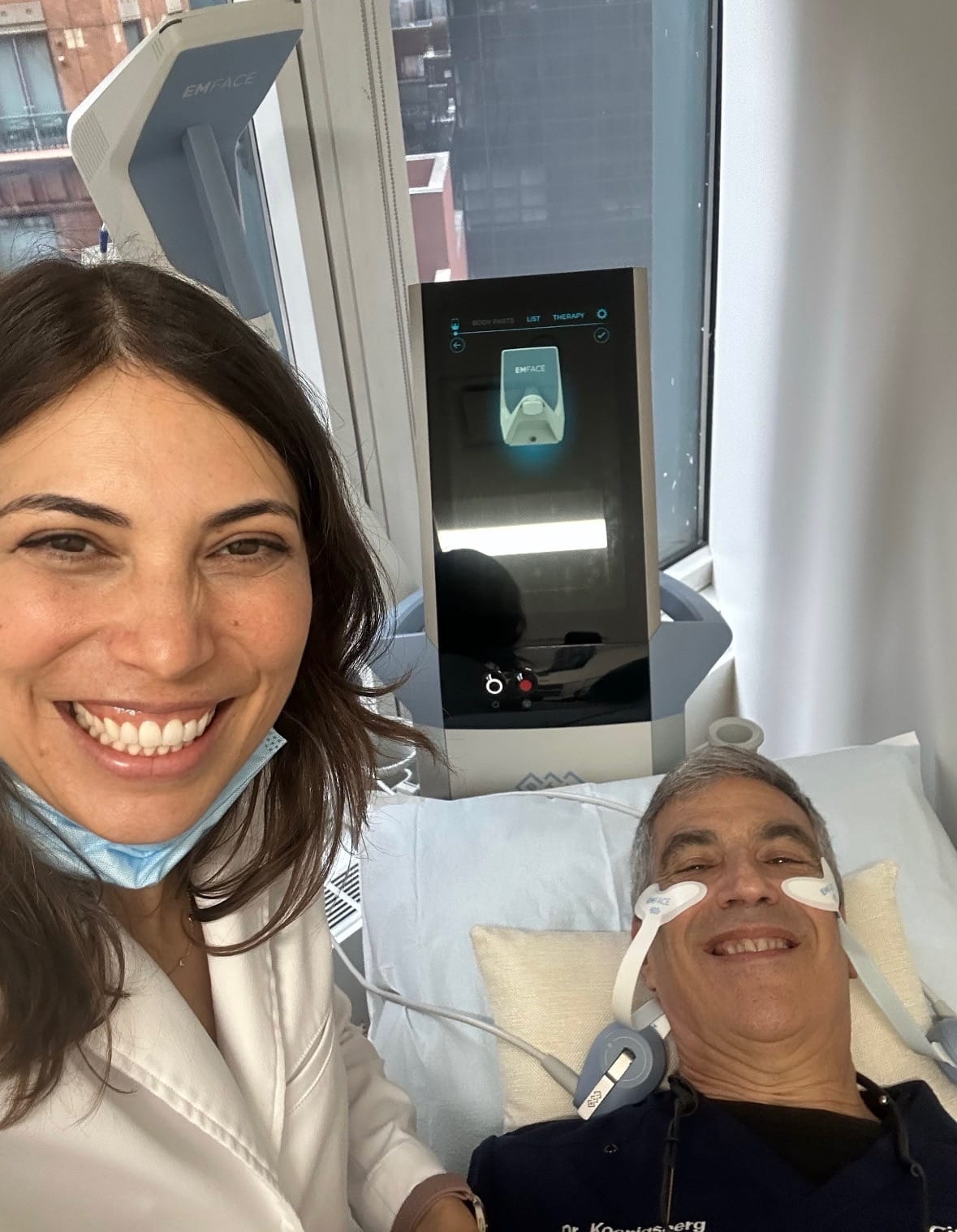
We’ve been offering EMFACE to patients at CitySpire Dental, and our doctors wanted to try it too! They wanted to know what it actually feels like to be the one in the treatment chair.
As dentists, our doctors already spend their careers thinking about facial anatomy, muscle structure and balance, which gives them a strong foundation for understanding how EMFACE works. But understanding a treatment from a clinical standpoint and experiencing it firsthand are two different things.
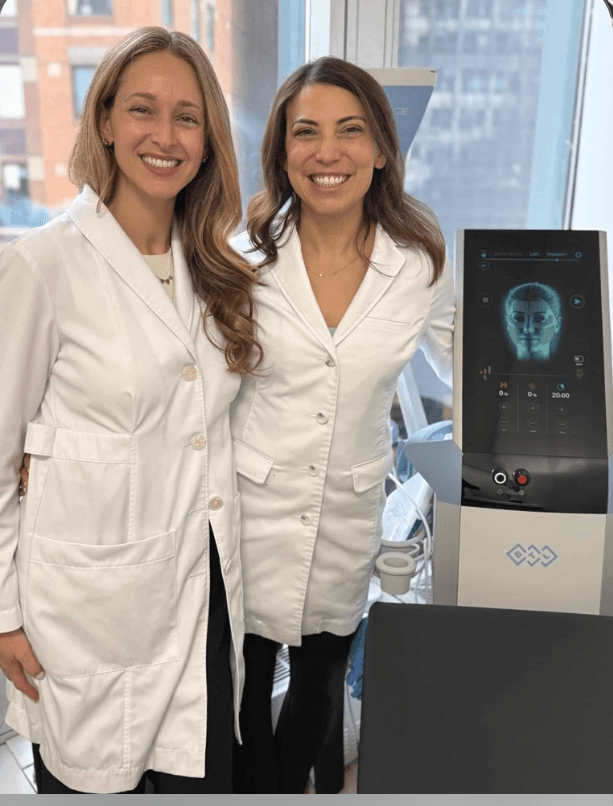
Four of our doctors — Dr. Andy Koenigsberg (known around the practice as Dr. K), his daughter Dr. Rebecca Koenigsberg, Dr. Robert Rawdin and his daughter Dr. Samantha Rawdin — decided to try it themselves, to see what patients notice during and after treatment, and what they’d tell someone considering it.
So, What Did Our Doctors Think?
Each doctor came into the experience with a different perspective, and each noticed something a little different.
Dr. K
“I was surprised how big the difference was when I looked at my before and after.”
Dr. Robert Rawdin
“It’s an easy procedure to do, was barely uncomfortable, and the results are great!”
Dr. Sam Rawdin
“I was able to do it on my lunch break and go right back to work!”
Dr. Rebecca
“The area under my eyes looked noticeably smoother, and I needed less makeup there afterward.”
Together, their experiences gave us a chance to look past the technology itself and focus on something more useful to patients: what does EMFACE actually feel like, and what might someone realistically notice?
It’s Not Just About Wrinkles
EMFACE combines synchronized radiofrequency energy with electromagnetic muscle stimulation, targeting the skin and the facial muscles at the same time.
That distinction matters, because facial appearance isn’t shaped by wrinkles alone. Skin quality, muscle tone and facial structure all play a role in how the face looks.
The goal isn’t to freeze facial movement or change your appearance. It’s to support a natural, refreshed look — without altering the way your face moves or expresses.
Can Results Look Different at Different Ages?
One question our doctors kept coming back to: do results look different depending on a patient’s age?
The honest answer is that it’s less about age and more about where each face is starting from — something Dr. K and Dr. Rebecca got to see firsthand, as a father and daughter trying the same treatment at very different life stages.
A younger patient might be focused on maintaining definition, supporting muscle tone, or improving overall skin quality. Someone with more age-related change may be more focused on firmness, collagen loss, or facial support. Same treatment, different goals, depending on the individual.
Dr. Rebecca shared that one of her patients decided to stop getting Botox after trying EMFACE — she liked having some natural movement back in her expressions, rather than a fully frozen look.
What Does EMFACE Feel Like?
Each session takes about 20 minutes — no needles, no surgery, no downtime.
Clinically, patients feel the facial muscles contracting from the electromagnetic energy, paired with a warming sensation from the radiofrequency. That’s the textbook description. Here’s what our doctors say it actually felt like:
Dr. Rebecca laughed that she actually fell asleep during her own treatment.
Why Experience It Ourselves?
We’d already seen EMFACE work for our patients. But being the clinician and being the patient are two very different vantage points, and our doctors wanted to close that gap.
Trying EMFACE themselves means they can now answer patient questions from firsthand experience, not just from what they’ve observed from the other side of the treatment chair. That’s the standard we hold ourselves to at CitySpire: we don’t just want to know how a treatment works — we want to know what it’s actually like to go through it.
A Natural Approach to Facial Rejuvenation
For most people, facial rejuvenation isn’t about looking different — it’s about looking rested, refreshed, and like themselves.
EMFACE offers a non-invasive way to work toward that, without needles or surgery, and without interrupting natural facial movement.
Now that our doctors have experienced it themselves, they can speak to something beyond the science: what it’s actually like to be the one in the chair.
Dr. Rebecca says she’s already planning to do it again, and after seeing her own results, she’s excited to keep offering it to her patients.

